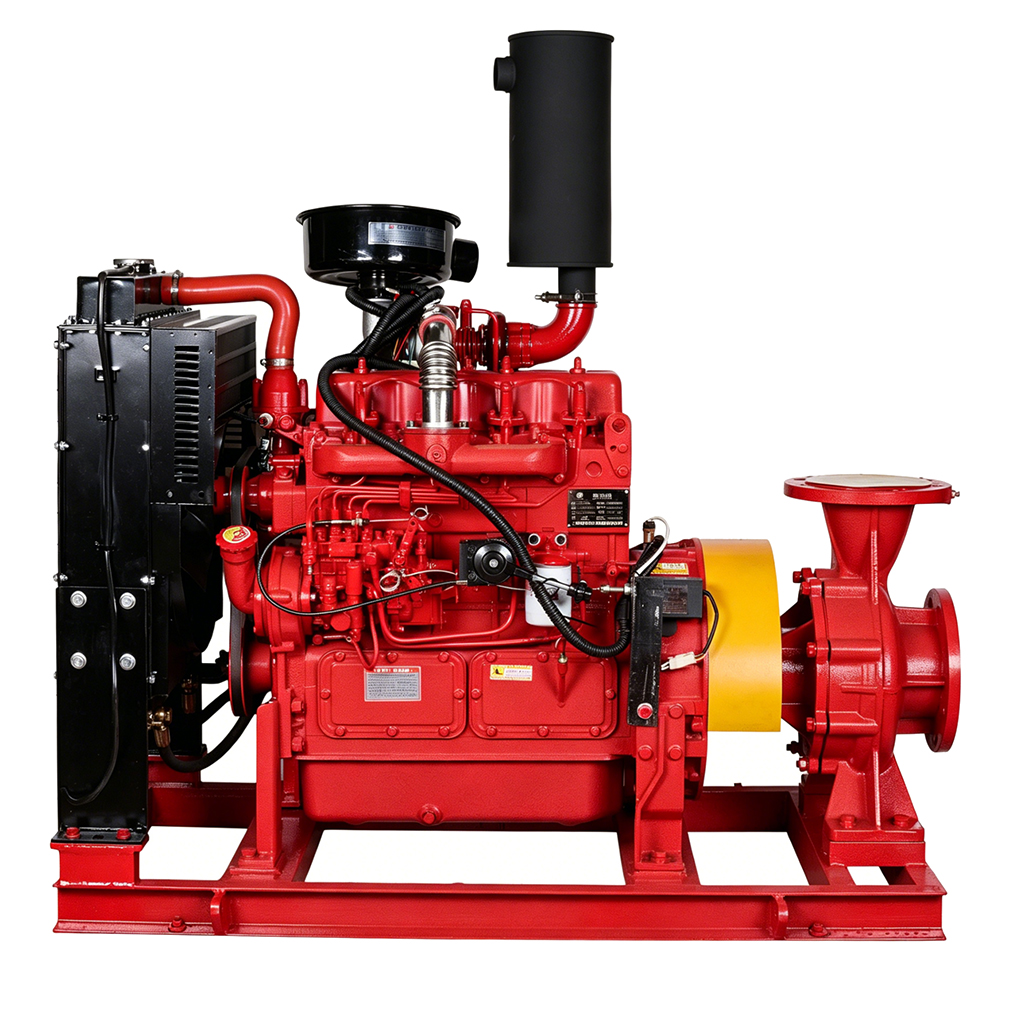
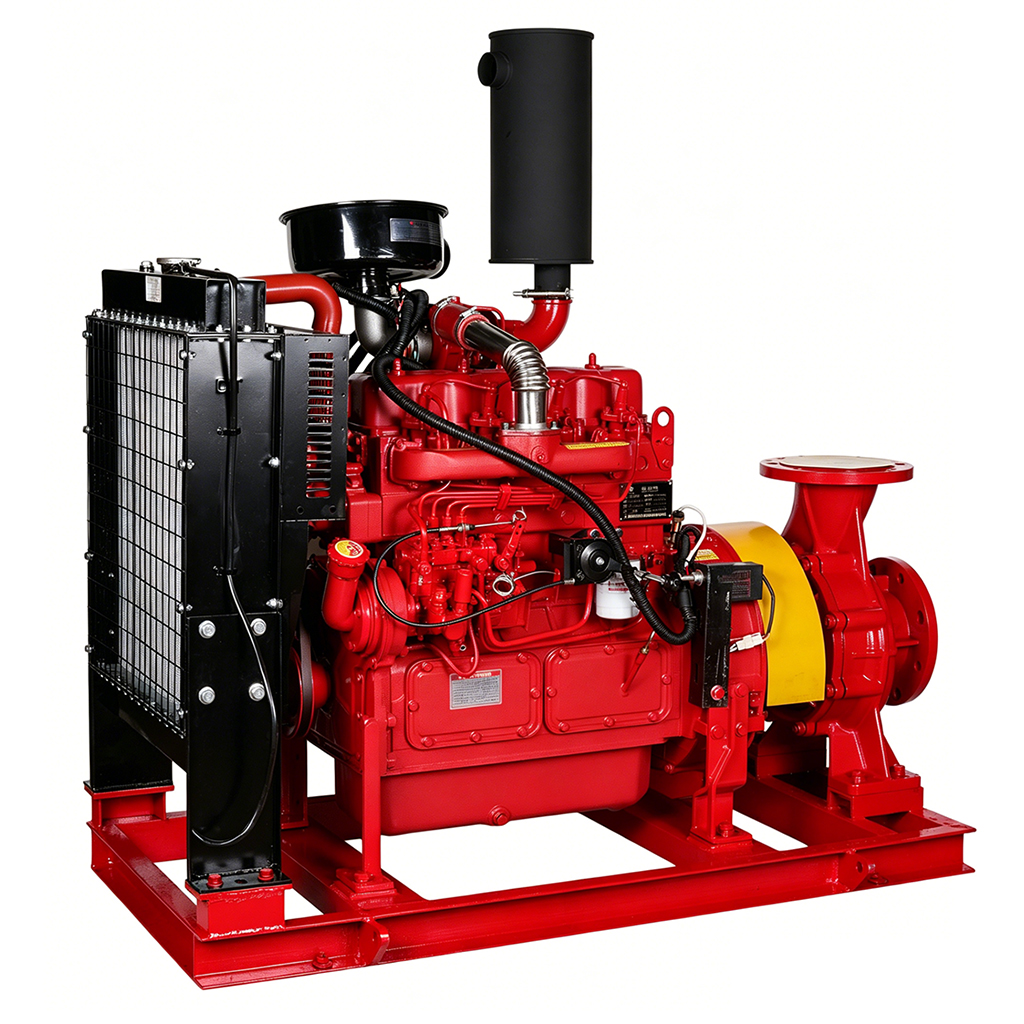
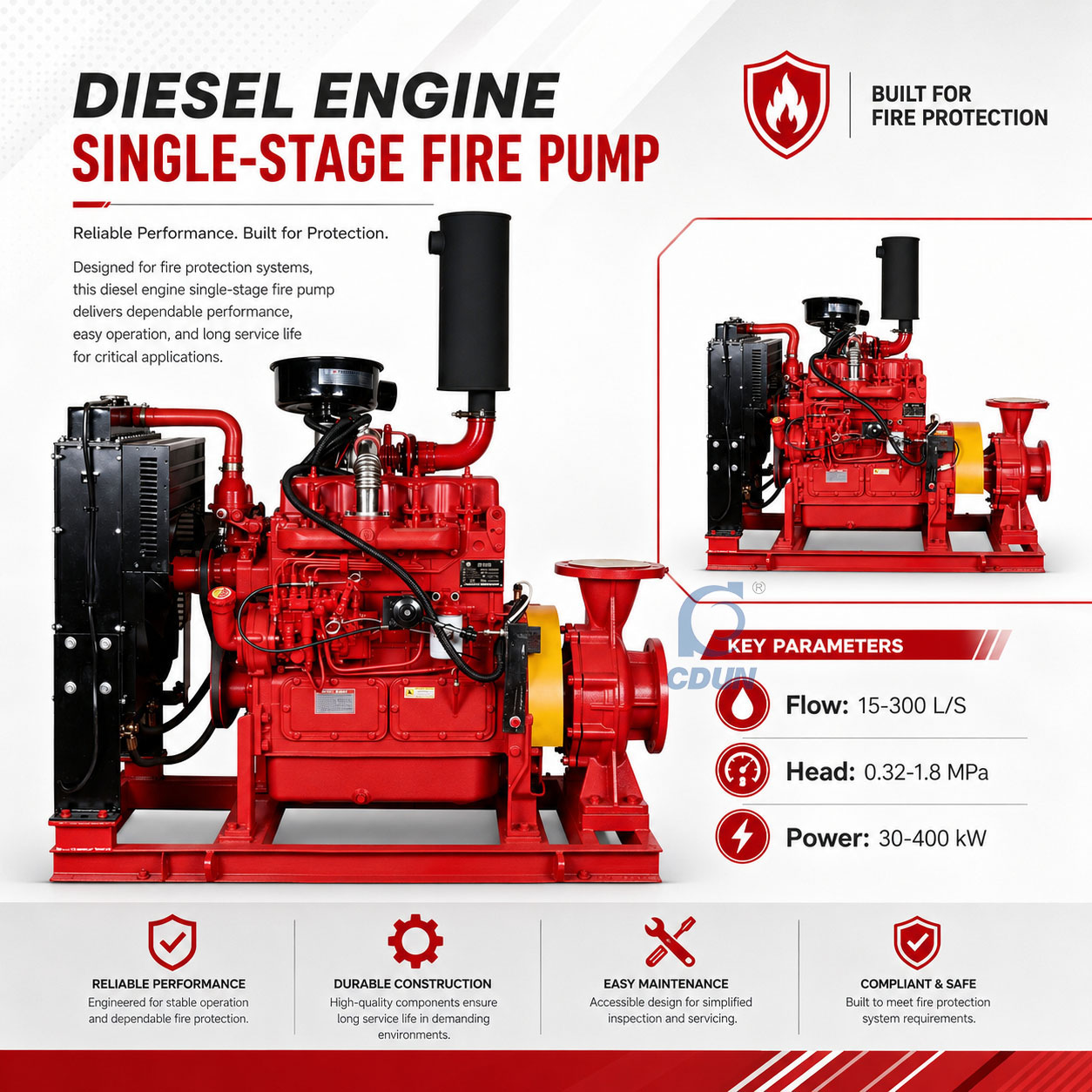
Diesel Engine Single-Stage Fire Pump
High-performance diesel-driven fire water pump for industrial and commercial fire protection systems. Reliable fire fighting pump with automatic control, excellent starting characteristics, and strong overload capacity. Ideal for fire hydrant systems, sprinkler systems, and water spray suppression applications.
Key Specifications
| Flow Rate | 15-300 L/s |
| Head | 0.32-1.8 MPa |
| Power | 30-400 kW |
Product Overview
The Diesel Engine Single-Stage Fire Pump (also known as diesel fire pump, diesel-driven fire water pump, or engine-driven fire fighting pump) is a critical component in fire protection systems where electrical power reliability cannot be guaranteed. Designed and manufactured by Shanghai Chaodun Machinery, this NFPA 20 compliant fire suppression pump delivers exceptional performance in emergency situations.
As a single-stage end-suction centrifugal pump powered by a diesel engine, this fire water pump provides reliable water supply for fire hydrant systems, automatic sprinkler systems, and water spray fire suppression systems. The diesel engine drive ensures continuous operation even during power outages, making it the preferred choice for critical facilities including residential buildings, hotels, office towers, commercial complexes, industrial factories, and hospitals.
Whether you need a fire pump for NFPA compliance, UL/FM certification requirements, or local fire safety regulations, our diesel engine fire fighting pump delivers the performance and reliability your facility demands.
Key Features
- Excellent Starting Characteristics – Reliable ignition system with automatic battery charging and pre-heating ensures the diesel engine starts quickly and reliably when needed most, even in cold weather conditions.
- Strong Overload Capacity – Robust engine design handles sudden load increases during fire emergencies without stalling, providing consistent water flow throughout the emergency event.
- Compact and Space-Efficient Design – Integrated skid-mounted configuration minimizes footprint while maximizing accessibility for maintenance and inspection, ideal for pump rooms with space constraints.
- Easy Maintenance Access – Strategic component placement and removable covers allow routine maintenance without disturbing connected piping, reducing downtime and service costs.
- Simple Operation with Automated Control – PLC-based control panel with automatic start/stop functionality, remote monitoring capabilities, and comprehensive alarm systems for unmanned operation.
- High Degree of Automation – Automatic transfer switch (ATS) integration, weekly test routines, battery monitoring, and fuel level sensors ensure the fire pump is always ready for immediate deployment.
Applications
- Fire Hydrant Suppression Systems – Primary water supply for indoor and outdoor fire hydrant networks in commercial buildings, industrial facilities, and municipal infrastructure.
- Automatic Sprinkler Fire Protection – Reliable water pressure maintenance for wet-pipe, dry-pipe, and pre-action sprinkler systems in warehouses, manufacturing plants, and high-rise buildings.
- Water Spray Fire Suppression Systems – High-pressure water supply for deluge systems protecting transformers, cable trays, flammable liquid storage areas, and process equipment.
- Residential and Commercial Buildings – Fire protection for apartment complexes, hotels, office buildings, shopping malls, and mixed-use developments requiring NFPA-compliant fire water supply.
- Industrial and Manufacturing Facilities – Critical fire suppression for petrochemical plants, power stations, warehouses, and production facilities with high fire risk classification.
- Hospitals and Healthcare Facilities – Life safety fire protection for hospitals, nursing homes, and medical centers where continuous operation is essential for occupant safety.
Customer Benefits
- Uninterrupted Fire Protection – Diesel engine drive eliminates dependency on electrical power, ensuring your fire pump operates during blackouts, grid failures, or electrical system damage caused by fire.
- Regulatory Compliance Assurance – Meets NFPA 20, UL, FM Global, and CCCF certification requirements, simplifying insurance approvals and fire marshal inspections for your facility.
- Reduced Total Cost of Ownership – Lower maintenance frequency, longer service intervals, and durable construction minimize lifetime operating costs compared to electric motor-driven alternatives.
- Rapid Emergency Response – Automatic start within 10 seconds of fire signal detection, with full flow capacity achieved in under 30 seconds, critical for early fire suppression.
- Flexible Installation Options – Horizontal or vertical configuration, indoor or outdoor installation, with multiple engine brand options (Cummins, Perkins, Deutz, Weichai) to match your project specifications.
- Comprehensive Technical Support – From system design consultation to installation supervision and after-sales service, our engineering team provides end-to-end support for your fire protection project.
Technical Specifications
| Parameter | Specification |
| Flow Rate Range | 15-300 L/s (240-4800 GPM) |
| Head/Pressure Range | 0.32-1.8 MPa (46-261 PSI) |
| Engine Power Range | 30-400 kW (40-536 HP) |
| Engine Speed Options | 1500 / 1800 / 2900 RPM |
| Pump Type | Single-stage end-suction centrifugal |
| Suction/Discharge Sizes | DN80-DN300 (3″-12″) |
| Material Options | Cast iron, ductile iron, bronze, stainless steel |
| Engine Brands Available | Cummins, Perkins, Deutz, Weichai, Yuchai |
| Control System | PLC-based with automatic start/stop, ATS integration |
| Certification | NFPA 20, UL, FM Global, CCCF |
Selection Guidance
Selecting the right diesel engine fire pump requires careful consideration of your facility’s specific requirements:
- Determine Required Flow and Pressure – Calculate the total water demand based on the number of sprinkler heads, hydrant outlets, and spray nozzles in your fire protection system. Our engineering team can assist with hydraulic calculations.
- Choose Appropriate Engine Power – Select engine horsepower based on the pump’s brake horsepower requirement at maximum flow and head, plus 10-15% safety margin for continuous duty operation.
- Consider Installation Environment – For outdoor installations, specify weather-protective enclosures with ventilation. For cold climates, request engine block heaters and battery warmers for reliable cold-weather starting.
- Select Control Panel Features – Choose between basic automatic start/stop panels or advanced PLC systems with remote monitoring, data logging, and building management system (BMS) integration.
- Verify Certification Requirements – Confirm whether your project requires UL/FM listing for insurance compliance, CCCF certification for Chinese market, or other local authority approvals.
- Plan for Fuel Storage – Size the day tank and main fuel storage based on NFPA 20 requirements (minimum 8 hours of runtime at 100% load for most applications).
Installation and Maintenance
Installation Requirements:
- Foundation: Level concrete pad with vibration isolation mounts
- Clearance: Minimum 900mm access space around all sides for maintenance
- Ventilation: Adequate air supply for engine combustion and cooling (consult installation manual)
- Exhaust: Route exhaust piping outdoors with proper insulation and rain caps
- Fuel System: Install day tank with automatic fill, water separator, and fuel level monitoring
Routine Maintenance Schedule:
- Weekly: Automatic test run (15 minutes minimum), battery voltage check, fuel level verification
- Monthly: Visual inspection of belts, hoses, and connections; check engine oil level
- Quarterly: Load test at rated capacity, inspect air filter, check coolant level
- Annually: Complete engine service (oil change, filter replacement), pump alignment check, control system calibration
Available Maintenance Services:
- Preventive maintenance contracts with scheduled service visits
- 24/7 emergency response for fire pump failures
- Spare parts inventory management and rapid delivery
- Operator training programs for facility maintenance staff
Available Configurations
Our diesel engine single-stage fire pumps can be customized to match your project specifications:
| Configuration Option | Available Choices |
| Engine Brand | Cummins, Perkins, Deutz, Weichai, Yuchai, Doosan |
| Installation Type | Horizontal, Vertical, Skid-mounted, Trailer-mounted |
| Control Panel | Basic automatic, PLC with touchscreen, Remote monitoring capable |
| Enclosure Type | Open skid, Weather-protective canopy, Sound-attenuated enclosure |
| Pump Material | Cast iron, Ductile iron, Bronze fitted, All stainless steel |
| Cooling System | Radiator cooling, Heat exchanger (jockey pump), Remote radiator |
FAQs
Q1: What is the difference between a diesel fire pump and an electric fire pump?
A: Diesel fire pumps are engine-driven and operate independently of electrical power, making them ideal for locations with unreliable power supply or where NFPA 20 requires a backup fire pump. Electric fire pumps are motor-driven and require reliable electrical service but typically have lower installation costs and simpler maintenance.
Q2: How quickly does the diesel engine fire pump start during a fire emergency?
A: Our diesel fire pumps are designed to start automatically within 10 seconds of receiving a fire signal and reach full rated flow within 30 seconds, meeting NFPA 20 requirements for automatic fire pump start-up.
Q3: What certifications do your diesel fire pumps have?
A: Our diesel engine fire pumps are available with UL listing, FM Global approval, NFPA 20 compliance, and CCCF certification for the Chinese market. We can provide the specific certifications required for your project location and insurance requirements.
Q4: How long can the diesel fire pump run on a full tank of fuel?
A: Per NFPA 20 requirements, our standard configuration includes fuel storage for a minimum of 8 hours of continuous operation at 100% rated capacity. Extended runtime configurations (12, 24, or 48 hours) are available upon request.
Q5: What maintenance is required for diesel engine fire pumps?
A: Weekly automatic test runs, monthly visual inspections, quarterly load tests, and annual comprehensive service are required. We offer preventive maintenance contracts to ensure your fire pump remains in optimal condition and compliant with NFPA 25 inspection requirements.
Q6: Can the diesel fire pump be installed outdoors?
A: Yes, we offer weather-protective enclosures and sound-attenuated canopies for outdoor installations. The enclosure includes ventilation louvers, exhaust routing, and cold-weather protection options for reliable operation in various climate conditions.
Contact Chaodun
For technical consultation, quotation requests, or project support regarding our diesel engine single-stage fire pumps, please contact our engineering team:
Website: https://chaodunpump.com
Email: Suzion@chaodunpump.com
WhatsApp: +44 751 8050 473
Phone: +86 21 5744 5678
Our fire protection engineers are available to assist with pump selection, system design, hydraulic calculations, and technical support for your fire suppression project.